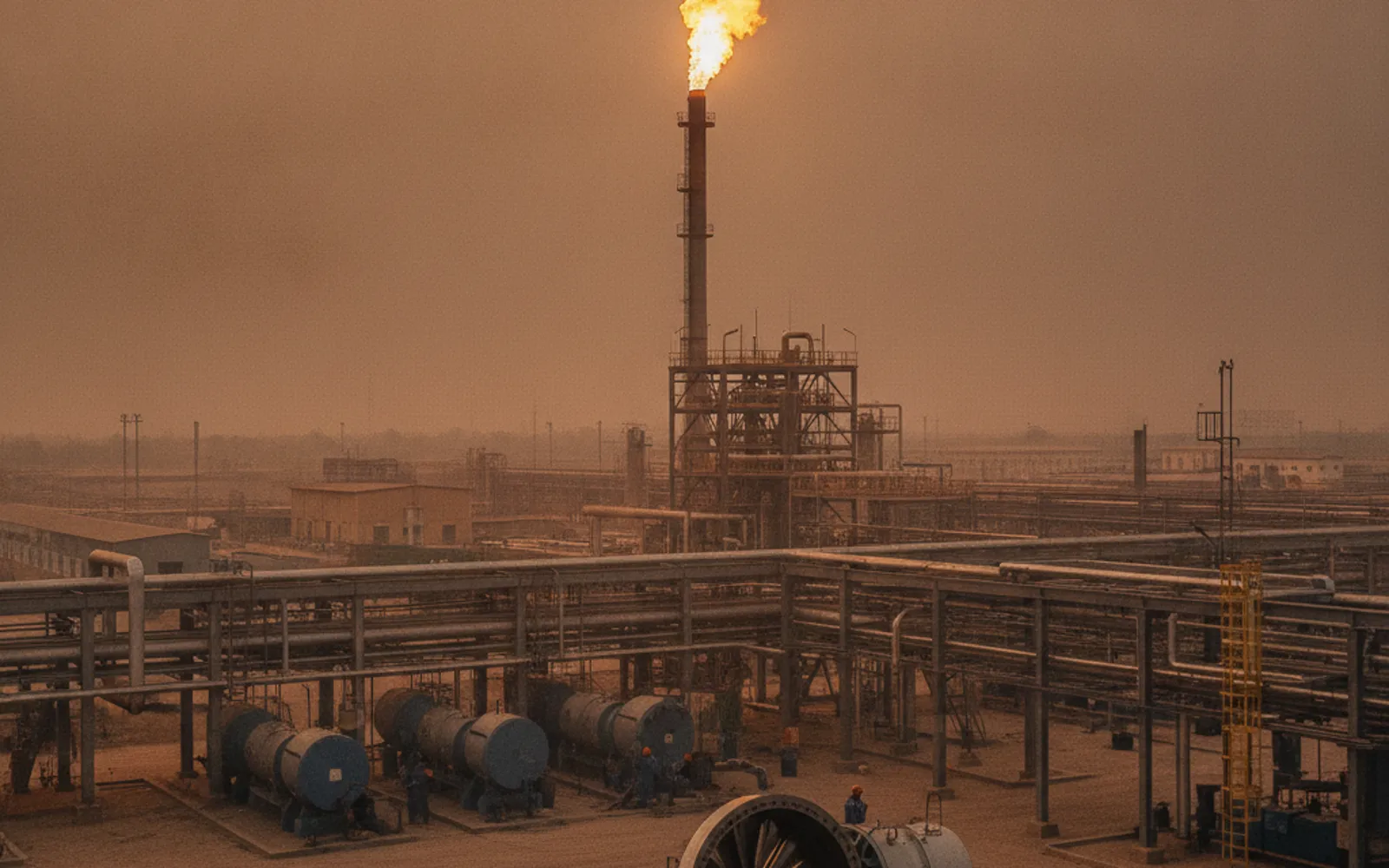
Rivers State carries the densest population of gas turbines, steam turbines and compressor trains in Nigeria. We overhaul and maintain that equipment on planned outage windows across Port Harcourt city, Trans-Amadi, Onne, Eleme and the flow station belt.
Port Harcourt is the operating centre of Nigeria's oil and gas service economy, and the rotating equipment load that comes with it is unlike anywhere else in the country. Within Rivers State you find heavy duty gas turbines on co-generation duty, condensing and back pressure steam turbines, aeroderivative packages driving gas compression, and diesel and gas generator sets running everything from Trans-Amadi factories to Onne logistics bases. Our field teams work on that population directly, from combustion inspections and borescope surveys through to full rotor overhauls and alignment of complete trains.
What makes this environment demanding is not only the number of machines but the conditions they run in. Humid estuarine air off the Bonny River channel, salt carry near the coast and the particulate loading residents know as soot all load intake filtration, foul compressor blading and stress generator insulation faster than at an inland site. We scope each job around measured condition rather than a generic interval copied from a manual, and the reasoning goes into the written proposal before any work starts. Book a plant assessment or request a technical proposal to begin.
Borescope led inspection, combustor and transition piece work and hot gas path change out, planned around your Rivers State turnaround window. Associated gas with variable heating value, liquid carryover and sulphur content shortens hot end life, so we set scope on equivalent operating hours and fired starts rather than the calendar.
Rotor lifts, blade and diaphragm inspection, gland and labyrinth seal renewal, journal and thrust bearing work, governor and trip system proving on the back pressure and condensing sets used across Eleme and Trans-Amadi process plants. Full scope detail sits on our steam turbine overhaul page.
Planned maintenance, alternator electrical testing, control and AVR work and resistive load bank proving for standby and prime rated sets across Port Harcourt, Onne and Oyigbo. Standby sets that idle through the dry season and then carry full load in a wet season outage need proving under load, not a no load test run. See generator maintenance.
Laser alignment, field and workshop balancing, vibration diagnostics, dry gas seal and bearing work on the centrifugal and reciprocating packages that dominate Rivers State flow stations and gas processing sites. Driver and driven machine are treated as one train, which is covered under rotating equipment services.
A gas turbine in Port Harcourt swallows air that is humid almost year round, frequently salt bearing near Onne, Okrika and Bonny, and loaded with the fine carbon particulate that has affected the city's air since the middle of the last decade. The first symptom is filter differential pressure climbing far ahead of the expected curve, followed by compressor fouling, a measurable drop in output and a rising heat rate. We trend intake differential pressure, compressor discharge pressure and corrected output together, then set online and offline water wash frequency from that data rather than from a fixed monthly habit.
The same air reaches generator windings. On coastal and estuarine sites we consistently see insulation resistance and polarisation index drift downward where space heaters have been left unserviceable during shutdowns, and moisture ingress accelerates end winding contamination. Our electrical scope covers insulation resistance and polarisation index, winding and RTD checks, tan delta where the machine and access allow, wedge tightness assessment and cleaning and revarnishing when the results justify it.
Fuel gas quality is the third factor. Associated gas at flow stations and co-generation sites carries liquids, and scrubber or coalescer performance that has quietly degraded shows up later as combustion hardware distress, exhaust temperature spread outside limits and hot end sulphidation. We inspect fuel gas conditioning as part of the turbine scope, because replacing hot gas path parts without fixing the fuel that damaged them simply buys a shorter interval.
Almost nothing in Port Harcourt can be taken down on short notice. Gas processing, co-generation and the gas fired generating capacity clustered around Afam, Omoku and Trans-Amadi all run to production commitments, so the real constraint on an overhaul is the outage window and the cost of every extra day inside it. We build the plan backwards from the date the machine must be back on load, identify the long lead items early, and separate work that can be done with the unit running from work that genuinely needs the shutdown.
Long lead items are the usual cause of an overrun: hot gas path sets, rotor components, thrust and journal bearings, dry gas seals, control cards and specialist gaskets. Imported spares are quoted in Naira with the USD equivalent shown in brackets so procurement can compare like for like, with a stated validity window because exchange rate movement affects the landed figure. Clearance through Onne and the Port Harcourt terminals is planned into the schedule rather than assumed, and our indicative ranges are explained on the maintenance cost page.
Site access carries its own lead time here. Free zone entry at Onne, permit to work systems at gas processing and flow station locations, HSE documentation, medicals and site induction all sit ahead of the first day of work, and traffic on Aba Road and into Trans-Amadi affects daily crew and equipment movement. We handle mobilisation from Lagos by road and through Port Harcourt International Airport at Omagwa, and we also serve Warri and the wider Niger Delta from the same field organisation.
Every engagement starts with evidence. Before we quote a major scope we take a condition baseline: vibration measurement and analysis referenced to ISO 20816 limits, lube oil sampling for particle count to ISO 4406 along with water content and varnish potential, thermography on switchgear and bearing housings, borescope imagery where access allows, and performance data including output, heat rate, exhaust temperature spread and starting reliability. That baseline tells you whether the machine needs a combustion inspection, a hot gas path scope or a full major, and it gives procurement a defensible reason for the figure in the proposal.
During the outage the controls are just as important as the manpower. We record as found clearances and compare them against as left, apply non destructive testing to critical components, balance rotors to a stated ISO 21940 grade, align trains with laser equipment against calculated hot alignment targets, and flush lube systems to an agreed cleanliness target before roll. Hold points are agreed with your maintenance team in advance so nothing closes up without inspection sign off.
Recommissioning follows a written sequence: protection and trip function testing, overspeed proving where applicable, a controlled load ramp and a stabilised load run with data captured. You receive a handover dossier containing measurements, photographs, parts replaced, deviations found and a dated plan for the next inspection interval. That document is what lets you defend the maintenance budget in the next planning cycle, and it feeds directly into any wider plant audit we carry out for you.
Yes. We mobilise across Trans-Amadi and the city industrial areas, Onne and the free zone terminals, Eleme, Oyigbo, Okrika, Bonny, Degema, Ahoada and the flow station belt in Ogba, Egbema and Ndoni. Remote and river access locations are quoted with mobilisation, marine or road logistics and standby time shown as separate lines so you can see exactly what the location is costing. For sites west of the delta we also operate from Warri.
They shorten filtration and washing intervals well before they shorten mechanical ones. Intake filter elements load faster than the supplier curve suggests, compressor fouling costs output between washes, and moisture with salt carry degrades generator winding insulation on machines that sit idle in humid halls. We set intervals from trended differential pressure, corrected output and insulation test results at your specific site rather than applying a figure taken from a dry inland installation.
Yes. We plan mobilisation around your permit to work system, gate pass and free zone access requirements, site inductions, medicals and HSE documentation, and we build that lead time into the schedule instead of discovering it on day one. Method statements and job safety analysis for the specific scope are submitted for your approval before the crew travels. Where a client requires a toolbox and risk review on arrival, our supervisor runs it with your area authority.
Every proposal is priced in Naira, with a USD equivalent shown in brackets for imported spares and specialist services so procurement can compare offers on a common basis. Labour, mobilisation, consumables, spares and any specialist services are itemised separately, and spares carry a stated quotation validity window because exchange rate movement changes the landed cost. Indicative ranges by scope are set out on our maintenance cost page, and a firm figure follows the site survey.
Written technical proposals. Outage support available.