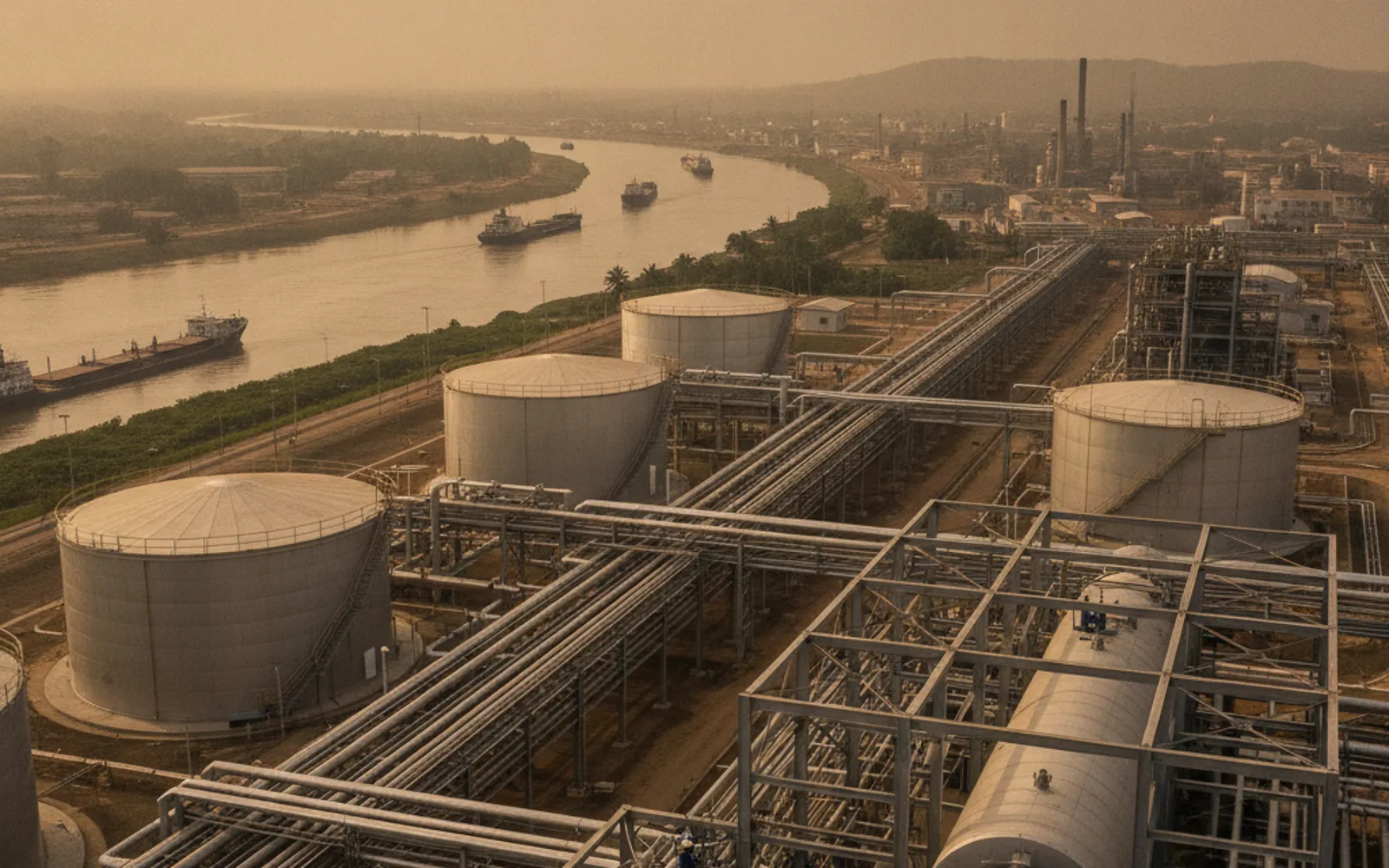
Steam turbine overhaul, gas turbine inspections, generator maintenance and rotating equipment repair for plants across Warri, Ekpan, Sapele and the Ughelli axis. Engineers and tooling mobilise from Lagos, with spares kitted before your outage window opens.
Warri sits at the centre of Delta State's refining, petrochemical and gas gathering corridor, and most of the rotating equipment holding that corridor together has been in service for decades. Steam turbines, industrial gas turbines, boiler feed pumps, process compressors and captive generator sets in this belt were commissioned long before the current maintenance teams arrived, and formal OEM support for several of those frames has thinned or ended. The result is familiar to anyone running a plant here: unplanned trips, outages that stretch while a single obsolete part is chased, and machines nursed along on vibration readings nobody is comfortable with.
Axiom Power Services works across Warri and the wider Delta industrial belt, including Effurun, Uvwie, Ekpan, Ubeji, Udu, Aladja, Sapele and the Ughelli axis, and out to riverine sites reached by boat from Warri. We scope turbine and generator work before we price it, using borescope, vibration and lube oil data to establish what the machine actually needs, then issue a written work pack with a spares list that flags long lead items early. To start, book a plant assessment or call +234 803 000 0000 to request a technical proposal.
Casing lift, rotor removal, diaphragm and blading inspection, bearing, gland and governor work on steam sets around Warri, Ekpan and Sapele. On units of this vintage the recurring findings are wet steam erosion at the last LP stages, wiped thrust pads and gland leakage.
Borescope, combustion and hot gas path inspections on industrial gas turbines across Delta State, scheduled on equivalent operating hours and starts rather than on the calendar. Salt aerosol off the Escravos coast and year round humidity foul axial compressors faster here than at inland sites.
Stator and rotor testing, insulation resistance and polarisation index, excitation and AVR work, bearing and cooling checks for the captive and standby sets that carry Warri plants through grid excursions. Sets are proved on load bank at rated load, not signed off at idle.
Process pumps, centrifugal and reciprocating compressors, gearboxes, fans and blowers repaired, laser aligned and balanced on site or in workshop. Where the part number is withdrawn, we dimension the component and produce a manufacturable drawing instead of waiting on a discontinued catalogue.
The industrial load around Warri is concentrated in a few clear activities: refining and petrochemical processing at Ekpan, gas gathering and export moving through the Escravos and Forcados systems, power generation on the Ughelli axis and at Ogorode near Sapele, and the tank farms, jetties and fabrication yards along the Warri River. Each of those places a different duty on rotating equipment, but they share one condition. The machines are old, they run long unbroken campaigns, and the penalty for stopping them is counted in lost production rather than in maintenance hours.
On steam sets the common findings are wet steam erosion on the last LP stages, solid particle erosion on HP nozzles and blading where boiler water chemistry has drifted, babbitt wear and wiped thrust pads, gland seal degradation and slow drift on older mechanical hydraulic governors. On gas turbines the coastal environment dominates. Salt aerosol, humidity that stays high for most of the year and hydrocarbon vapour from nearby tankage load the inlet filtration and foul the axial compressor, while wet associated gas and liquid carryover distress fuel nozzles, liners and transition pieces. Process pumps and compressors, meanwhile, fail on seals, bearings and alignment far more often than on anything exotic.
That pattern is why we start with data rather than a strip down. A plant assessment combining borescope images, vibration measurement to ISO 20816, lube oil analysis and performance trending will usually establish whether a unit needs a combustion inspection, a full steam turbine overhaul or simply a corrected alignment and a filtration change. Just as important, it tells you what to buy before the outage instead of during it.
Turnaround windows in Delta State are set by process and by product commitments, not by the maintenance department. Once the date is fixed, the variables still under your control are scope definition, parts availability and manning, and all three are decided months earlier. We build the work pack backwards from the window: pre-outage inspection, firm scope, long lead item list, kitting, rigging and lifting plan, then shift coverage for the critical path.
Logistics deserve their own line in that plan here. Heavy items either move through Warri Port, Koko or Sapele, or come down by road from Lagos, and the draft constraint at the Escravos bar shapes what can realistically arrive by sea and what has to be trucked or barged. For riverine locations, boat availability, tide and permit clearance control crew rotation as much as the work itself, so tooling, consumables and spares go out in one planned transfer rather than three unplanned ones.
The commercial argument is straightforward. A day of lost throughput at a refining, gas processing or generation site in Delta State is worth far more than the shelf cost of a bearing set, a nozzle ring or a spare rotor, so the part sitting in your stores is almost always cheaper than the one expedited by air freight two weeks into an outage. We set that trade out in writing in the proposal, and indicative figures are on the maintenance cost page.
A large share of the rotating equipment around Warri, Sapele and Ughelli now sits outside formal OEM support. Catalogue numbers are withdrawn, original drawings are incomplete or lost, and the quoted lead time for whatever is still available runs past the outage window. That is an engineering problem with a route through it, not a reason to condemn a serviceable machine.
The route is dimensional survey of the worn or failed component, material verification by positive material identification, and a manufacturable drawing that restates fits, tolerances, clearances and surface finishes. From there the decision is repair or remanufacture: weld build up and re-machining of journals and shaft ends, re-babbitting and scraping of bearings, blade tip and shroud repair, coupling and gearbox rework, followed by low speed balancing and a documented alignment. Where a rotor or casing is genuinely life expired, we say so in the report rather than dress up a repair that will not hold.
Everything leaves site documented, with the drawing, the clearances recorded as found and as left, and a vibration and performance baseline to trend against. That documentation is the difference between a plant with a spares strategy and a plant that rebuys the same emergency every year. See rotating equipment services for the workshop scope, or generator maintenance if the immediate priority is your captive and standby sets.
We work across Warri, Effurun, Uvwie, Ekpan, Ubeji, Udu, Aladja, Sapele, Koko, Burutu and the Ughelli axis, and out to riverine and swamp locations reached by boat from Warri. Engineers and tooling mobilise from our Lagos base by road, with heavy items routed by sea or barge where the load and the draft allow it. For riverine sites we plan boat access, tide and permit clearance into the schedule before crews travel. The neighbouring Rivers State industrial area is covered from Port Harcourt.
Start scoping four to six months before the turnaround window. Imported turbine and generator spares commonly run twelve to twenty weeks from order to site once manufacture, shipping and clearance are counted, and obsolete items take longer because they must first be surveyed and made. We can mobilise at short notice for a breakdown, but on a planned outage it is the parts, not the labour, that set the earliest realistic date.
Scope drives the figure. A borescope and combustion inspection on an industrial gas turbine typically falls between ₦6,000,000 and ₦18,000,000 (about US$3,800 to US$11,500) for labour, consumables and reporting, while a full steam turbine overhaul with rotor removal, blading inspection and bearing work starts from roughly ₦45,000,000 (about US$29,000) before parts. Riverine access, night shift working and crane or rigging hire are priced as separate line items so nothing is buried. Indicative ranges sit on the maintenance cost page, and a firm price follows the site survey.
In most cases yes, and it is a routine situation on the older machines around Warri and Ughelli. We survey the worn components, verify materials, produce a manufacturable drawing, then either repair the existing part by weld build up, re-machining and re-babbitting or have a replacement made to the recorded dimensions. Balancing, clearance setting and alignment are documented so the machine carries a proper baseline afterwards. Where a rotor, casing or diaphragm is genuinely life expired, that goes in the report so you can plan a replacement rather than fund a repair twice.
Written technical proposals. Outage support available.